By Callum Trudgeon
Early in my pottery career, I found myself drawn to wood-fired ceramics. The variety of surfaces, the depth and richness of colour, and the way flame, ash, and embers leave behind their own marks on the clay were incredibly inspiring. I soon became equally interested in the firing process itself — the rhythm of the stoking, learning to control the kiln, and the unpredictable results. Like many others before me, I was hooked. Any chance to take part in a wood firing, I took it. I became particularly interested in longer firings and in kilns where the flame and ash interact directly with the pots, such as anagamas and train kilns.
Since relocating from the UK to Driving Creek in late 2022 to take up the role of lead production potter, I’ve been using a Phoenix kiln to get my wood-firing fix. The Phoenix is a fast-fire wood kiln, designed with efficiency in mind. Its firebox sits directly beneath the main chamber, with flames and heat rising and then moving across the ware in an almost “S” pattern before exiting through the chimney. This design allows for rapid temperature increases and relatively short firing cycles — ours typically run around ten to twelve hours, but some people fire in as little as six to eight.
Our kiln is generally used for these shorter soda firings, where sodium carbonate is added into the kiln at around Cone 8 (approximately 1,250°C) to produce distinctive surface textures and colours. While I appreciate soda-fired surfaces, I find myself continually drawn to the distinct quality that comes from ash interacting more directly with the pots. There’s something about the subtlety, variation, and depth that can’t quite be replicated by soda alone. This led me to question whether we could push the Phoenix kiln further — adapting it to explore different effects, more typical of longer firings, without making any major changes to the kiln.
With that in mind, I decided to lead a kiln experiment — a 24-hour wood firing in the Phoenix fast-fire kiln — packed and fired in a different way to our usual method. Our intention wasn’t to replicate the results of an anagama, but to see how far we could push a short-form firing to produce varied, ash-rich surfaces in a more accessible and repeatable format.
The firing incorporated tumble stacking so we could pour bark and ash over the pots throughout the firing, and a hikidashi layer to pull red-hot pots out of the kiln. In addition to the pots in the chamber, a small number of pots were placed directly in the firebox. This placement exposed them to intense heat and a rich flow of ash and flame, offering a different surface effect from the chamber-stacked ware. It was fun and challenging but also deeply rewarding — both for the results and for what we learned along the way.
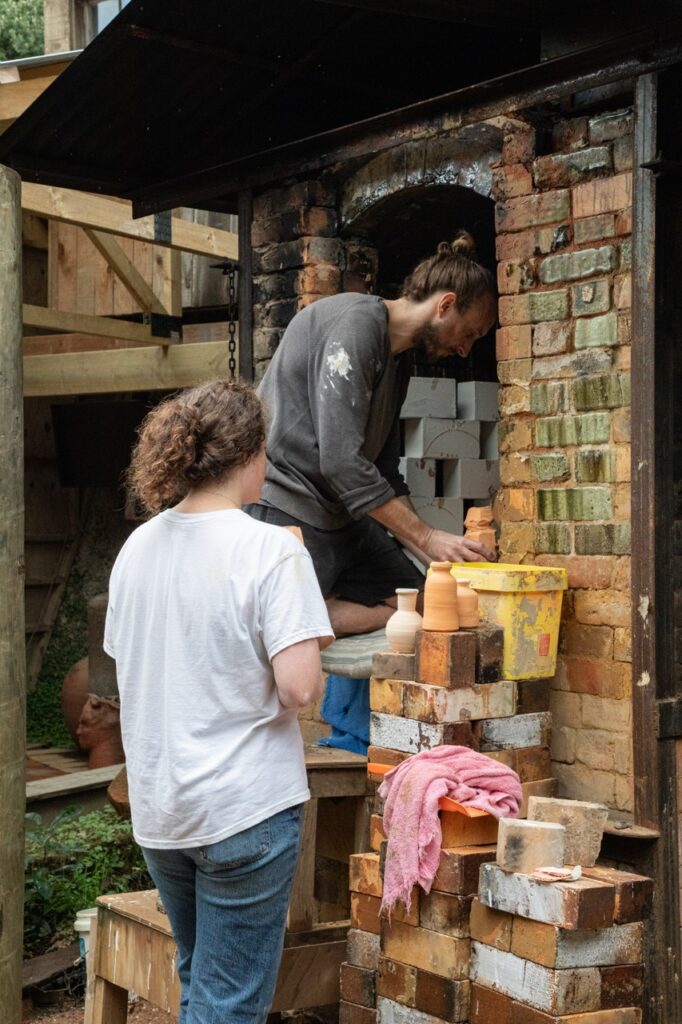
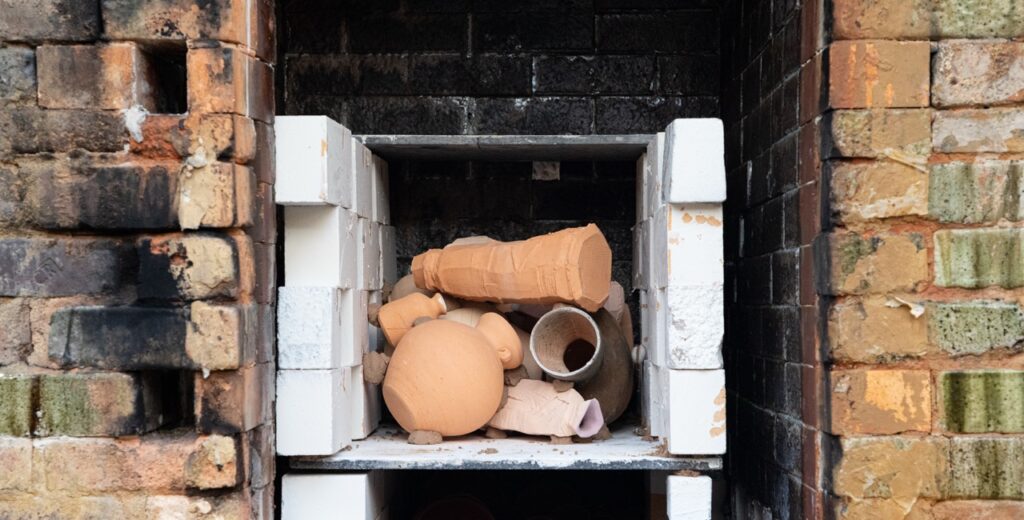
When packing the kiln, we essentially split it into three chambers. The bottom shelf became the hikidashi layer, while the upper two layers were tumble stacked. I had attempted this style of firing once before in this kiln with Aaron Scythe; during that attempt, we also included a hikidashi layer and tumble stacked the rest of the kiln. We had one large pot collapse in that firing, so this time I decided to split that section into two to reduce the weight on the pots in the stack.
During that firing, we placed wood directly into the chamber over the pots. This time, I used bark. We had accumulated a lot from our wood deliveries and I thought it would be a good way to make use of it. We used a wadding mix of fireclay and silica sand to separate the pots. Tumble stacking aimed to allow for a high density of pots in one area, and to expose them to uneven ash deposits while pouring the bark and ash into the kiln.
When we made the chamber door, we left three areas where bricks could be easily removed during the firing to access each section. The hikidashi door was larger than the other two, as we would be pulling pots out of it during the firing. The doors on the tumble-stacked areas were for pouring ash and bark into the kiln using a specially fabricated long scoop designed by our engineering team at Driving Creek. This tool allowed us to slide the scoop through to the back of the kiln and deposit material onto the pots.
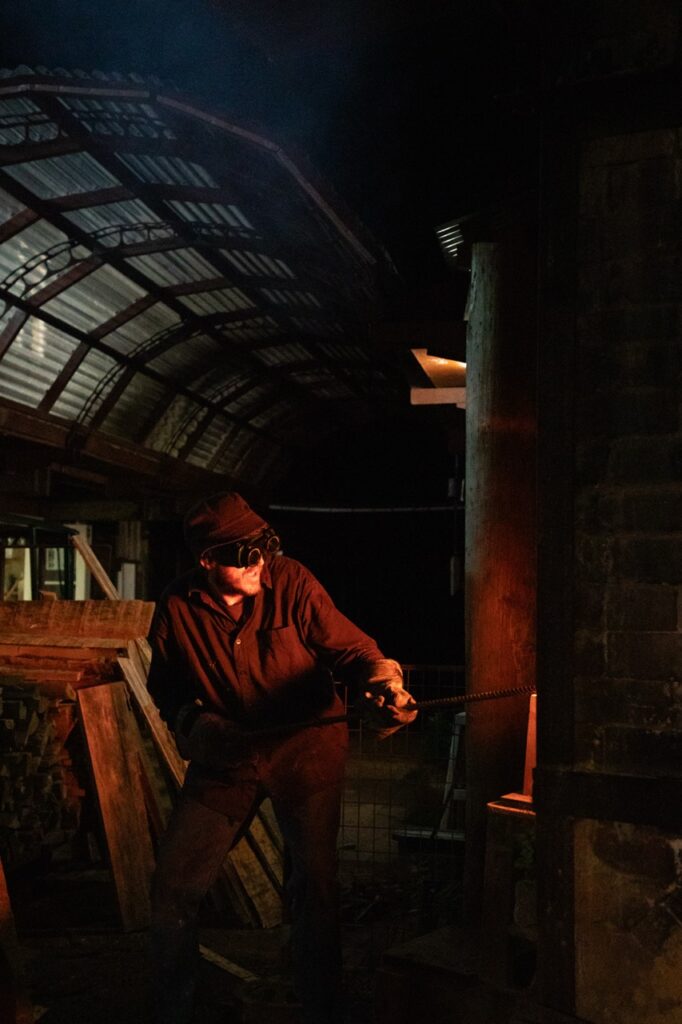
We began firing in the early evening, opting for a slow temperature rise overnight. This cautious approach was necessary because the kiln had been loaded earlier that day with wet wadding, and the bricks were soaking from the regular Coromandel rain. Ramping up the temperature too quickly risked exploding the wadding. Over the first twelve hours, the temperature gradually increased until we reached Cone 08 (approx. 950°C). This is when we started body reduction, and we kept the kiln in a reduced atmosphere for the rest of the firing.
From around 900°C, we began introducing bark and wood ash directly into the kiln. We continued this addition intermittently for approximately seven hours, maintaining the kiln temperature roughly between 1,050°C and 1,150°C during this phase.
After this, we began to raise the temperature, aiming for Cone 5 in the hikidashi section before we started to pull pots out. Hikidashi — the process of pulling pots from the kiln at high temperatures, similar to raku but generally hotter — was another aspect I attempted in the first experimental firing with Aaron.
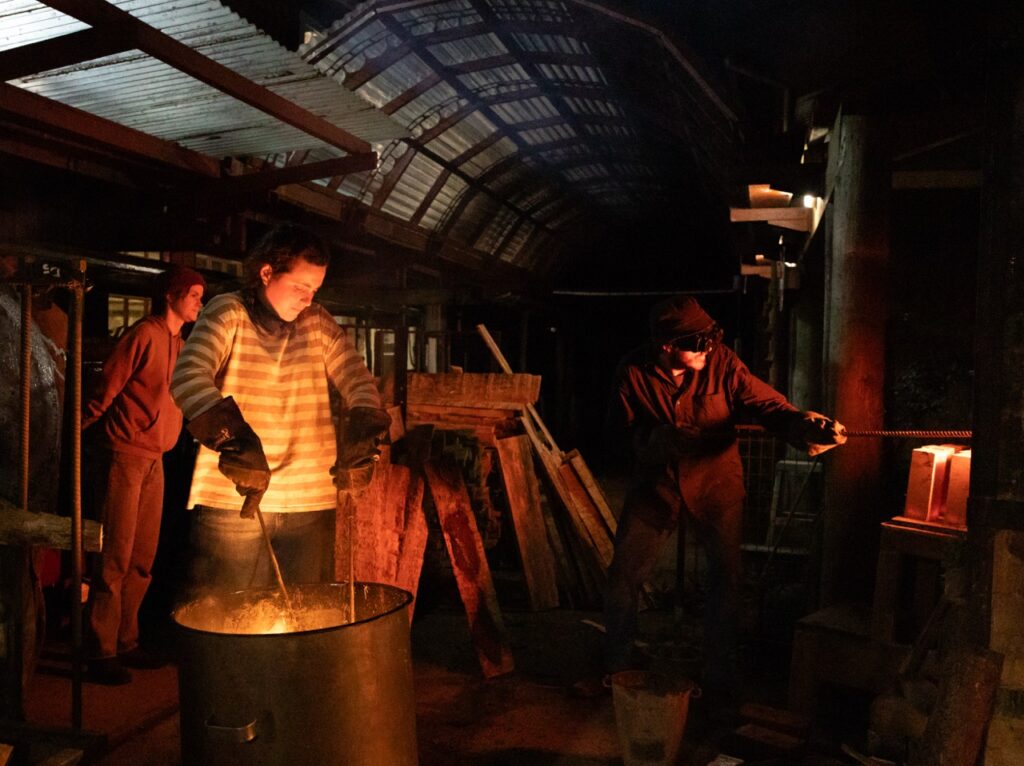
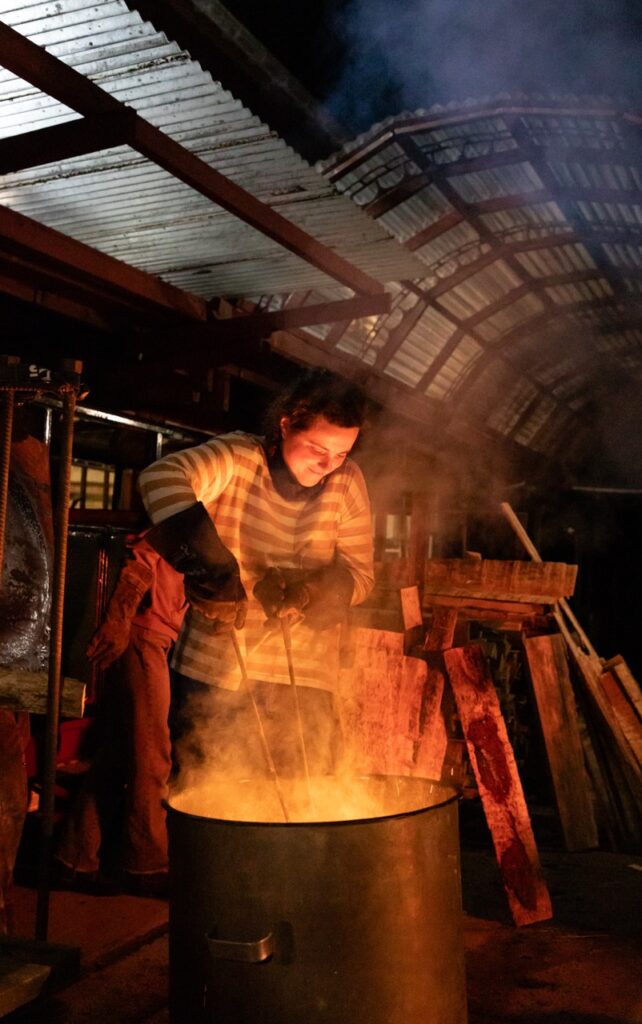
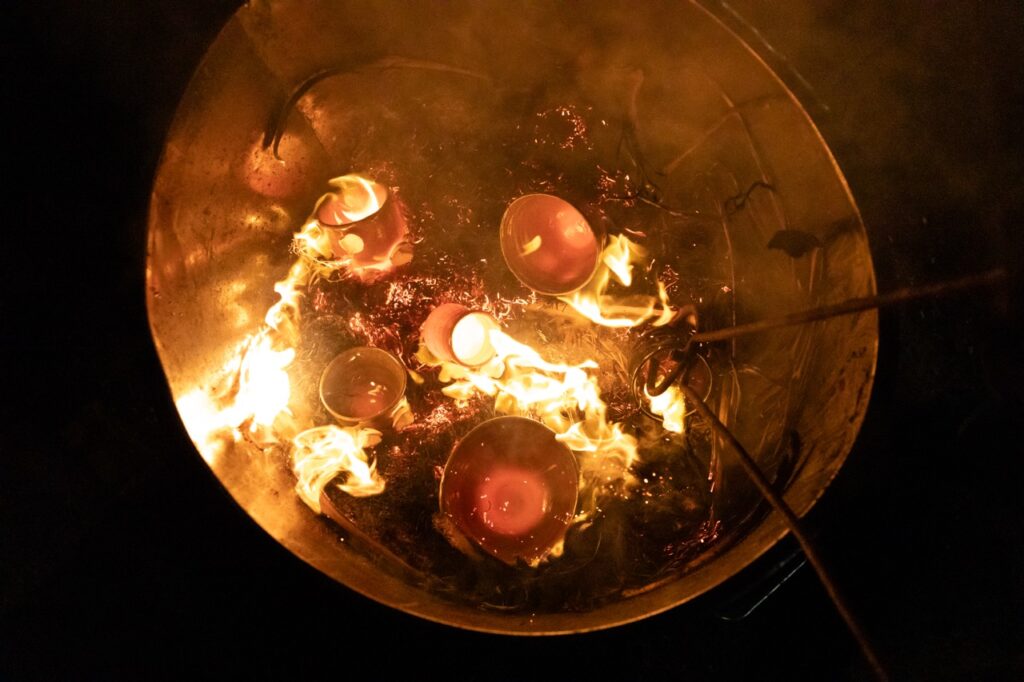
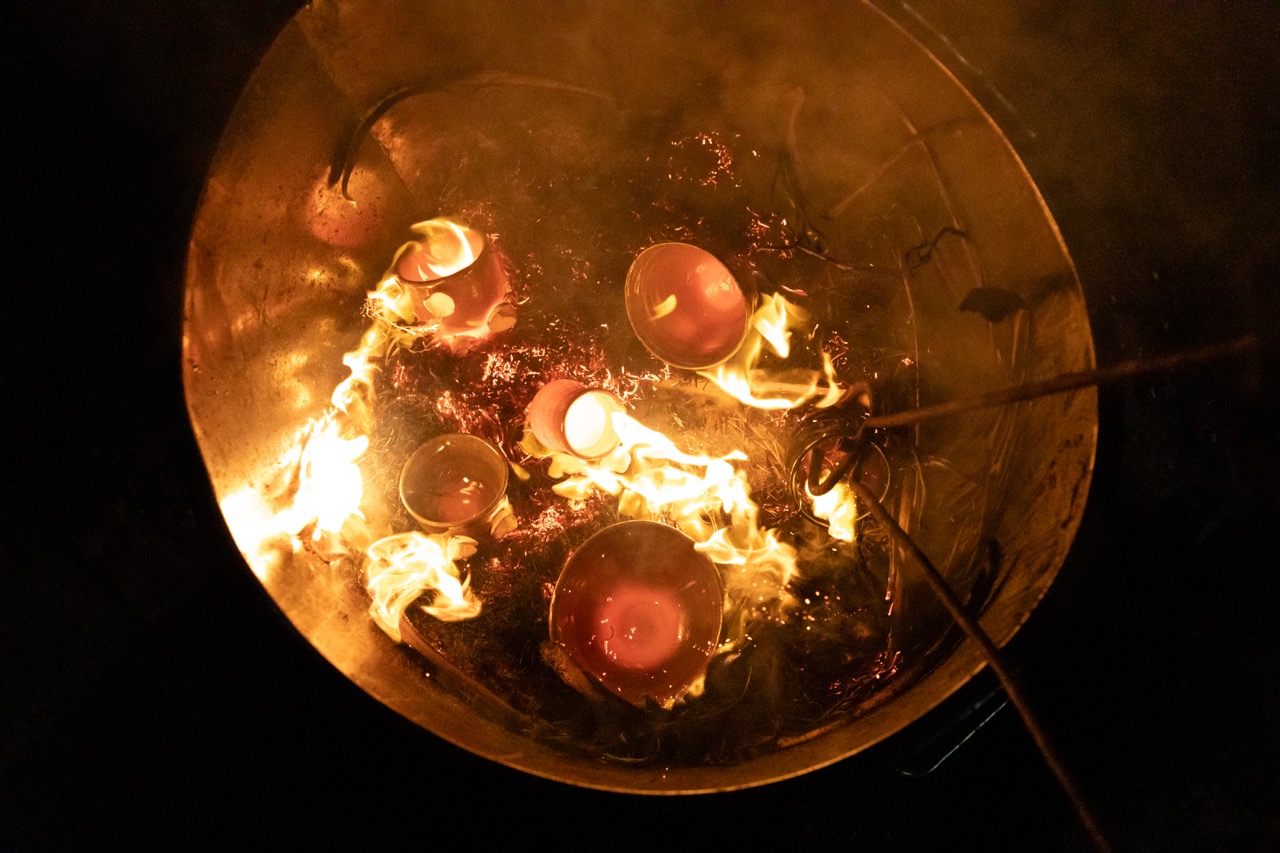
We had allocated the bottom shelf of the chamber specifically for this, creating a six-brick door in the main chamber door to allow safe and quick access. We had a large metal drum that we filled with cabbage tree leaves. We then pulled around six pots from the kiln and placed them into the drum, covering them with more leaves and putting a lid on. We soon realised we did not have enough leaves, so we looked around and found a mix of straw and sawdust so we could continue the process. Over a couple hours, we extracted about 24 pots from this hikidashi area, transferring them immediately into metal drums filled with cabbage tree leaves and straw. The drum was then sealed with a metal lid to promote slow cooling in a smoky, reducing environment.
By the time we had finished the hikidashi, we had reached Cone 10 in the upper section and were ready to begin closing down the firing. I had been researching down-firing, and this was a process I was keen to attempt. The aim, I believe, is to achieve brighter flashing and crystal formation due to slower cooling. To down-fire, you need to seal the kiln as much as possible and then slowly fire it down in temperature. Our Phoenix kiln does not have an active damper, so I tried cutting soft bricks that I could place through the passive dampers to block the exit flue from the chamber. We then closed the kiln as best we could and added one piece of wood into the firebox every ten minutes for the next three hours.
The firing yielded a fascinating range of surfaces and textures, providing valuable insights into both the capabilities and limitations of the Phoenix kiln when used in this unconventional manner.
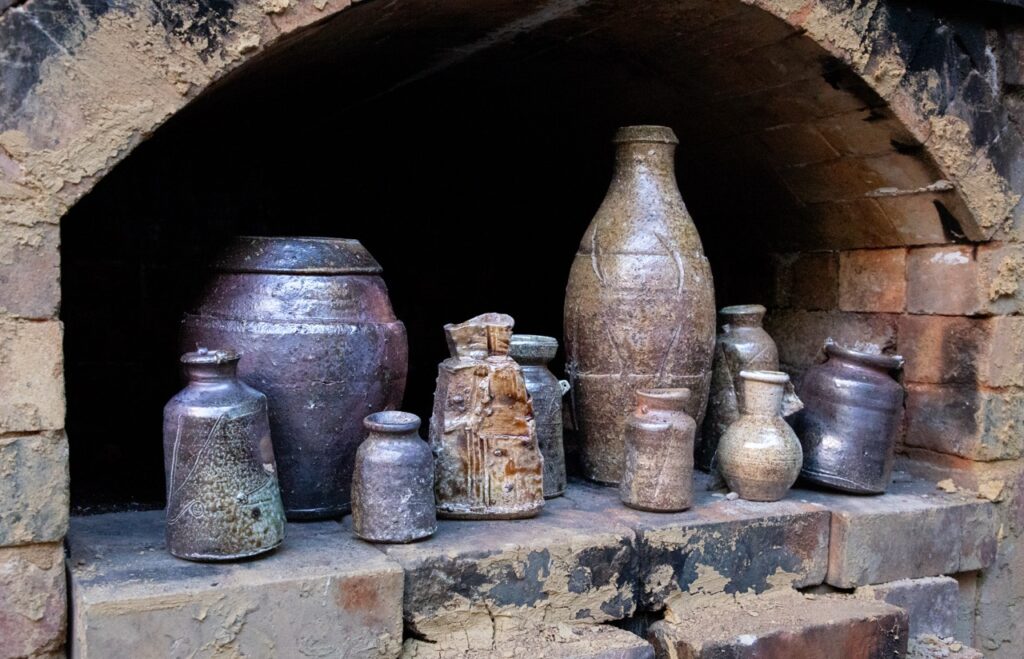
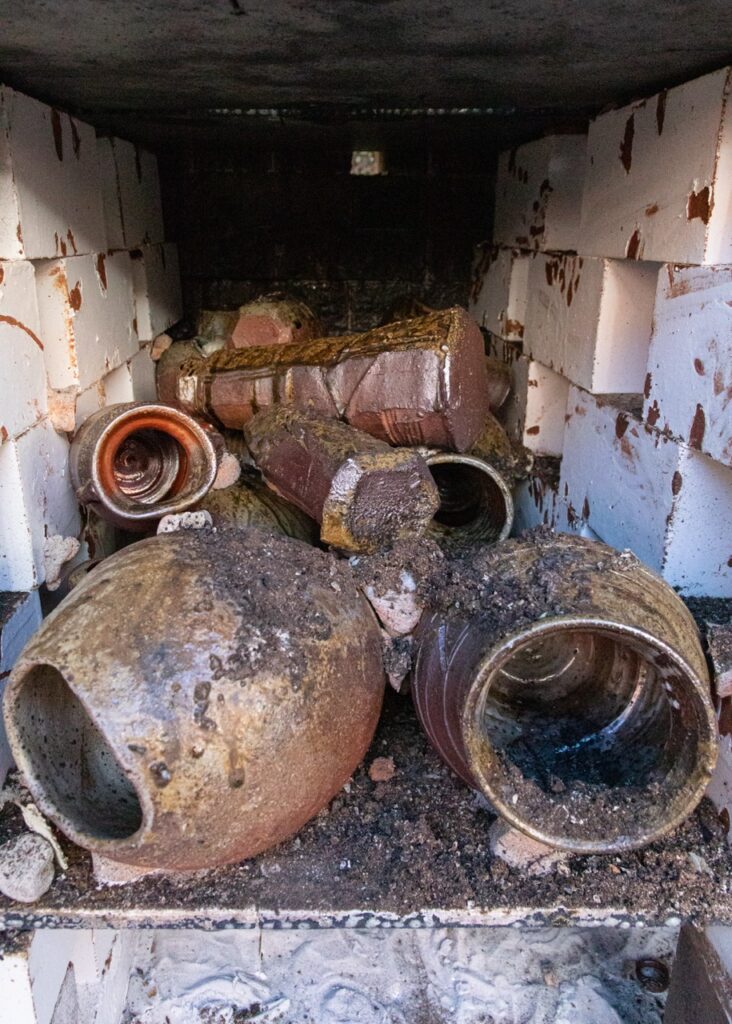
The bark and ash additions created thick ash glazes on many pots, particularly those located along the path of the scoop. The flame and ash interaction was lively, producing a variety of effects including subtle colour gradations, rich orange and brown hues, and natural glaze formations that would typically require longer firings in larger wood kilns.
However, there were also imperfections: some ash contained small fragments of nails and other debris that left marks on the ware. Moving forward, we plan to sieve our ash more carefully to avoid such contamination.
Comparing this firing to the first experiment, where we placed wood directly onto the pots, it became clear that the material and method of ash introduction significantly influenced the final surface. Bark and ash seemed to produce more glazed surfaces, whereas wood generated more ember markings. This has led me to consider experimenting with charcoal next, which may offer yet another spectrum of effects and may be closer to what I’m looking for.
One aspect that deserves particular attention was the attempt to down-fire during the cool-down phase. Unfortunately, the Phoenix kiln’s design made it difficult to seal the chamber adequately, and this part of the experiment was unsuccessful as I didn’t notice anything different to previous firings. This highlights an inherent limitation of the fast-fire design, but also points toward potential modifications or alternative firing strategies worth investigating.
The hikidashi segment produced some nice results, with rich black glazes. While rewarding, we questioned whether dedicating a significant portion of the chamber to this purpose was the best use of space — considering similar results might be achievable through simpler means or separate firings. I feel that, given the effort to tumble stack and add wood into the chamber, we would be better off using the hikidashi space for this purpose instead.
Importantly, the firing demonstrated that, although the Phoenix kiln cannot replicate the depth and subtlety of colour and ash effects found in multi-day anagama firings, it can produce its own compelling surfaces. The aesthetic differences are not shortcomings, but rather variations that enrich the range of wood-fired pottery achievable within this kiln.
While the technical aspects of the firing are important, what truly gives this experiment its significance is the spirit behind it. At Driving Creek, we have long embraced experimentation as an essential part of creative practice — a philosophy deeply rooted in the legacy of Barry Brickell, whose work and attitude continue to inspire us.
In ceramics, as in any art form, learning the rules is fundamental. Understanding clay bodies, kiln atmospheres, firing schedules, and surface chemistry provides the necessary foundation to produce consistent, high-quality work. But the more experienced you become, the more you realise that these “rules” are often guidelines rather than fixed laws. They invite exploration and challenge.
This firing was not about producing a perfect, replicable outcome. It was about playing with fire in a kiln known for speed and control — and seeing what unexpected results could emerge. It was messy, chaotic, and at times frustrating — but also fun, illuminating, and deeply rewarding.
A special thanks to Ellie Woods, Matilda Halley, and Riyah Snow — the firing couldn’t have happened without their help and enthusiasm.