Over the past decade, handmade ceramics have enjoyed a resurgence, with a large number of people taking up the craft as a creative outlet. With this resurgence, a growing number of hobbyists are looking to take the next step towards making a living from their pottery. I feel we need to ask the question of how we maintain a standard of work and training to ensure a level of quality in the future of the craft. I’m of the opinion that we should be looking towards apprenticeships as a way of doing this.
Working in a studio environment, learning on the job alongside more experienced hands, is a training model that has been tried and tested over hundreds if not thousands of years, and it can teach far more than books or YouTube alone. The current resurgence is happening just in time to gain knowledge from the previous generation of potters who still hold the traditional skills. I will admit I have a bias towards apprenticeships, as this is how I learned the craft. However, I initially trained as a furniture maker at college before starting my pottery apprenticeship at the Leach Pottery, so I have experience with different models of learning a craft. For me, learning in a real-world environment with hands-on training is the best way of acquiring skills and understanding processes.
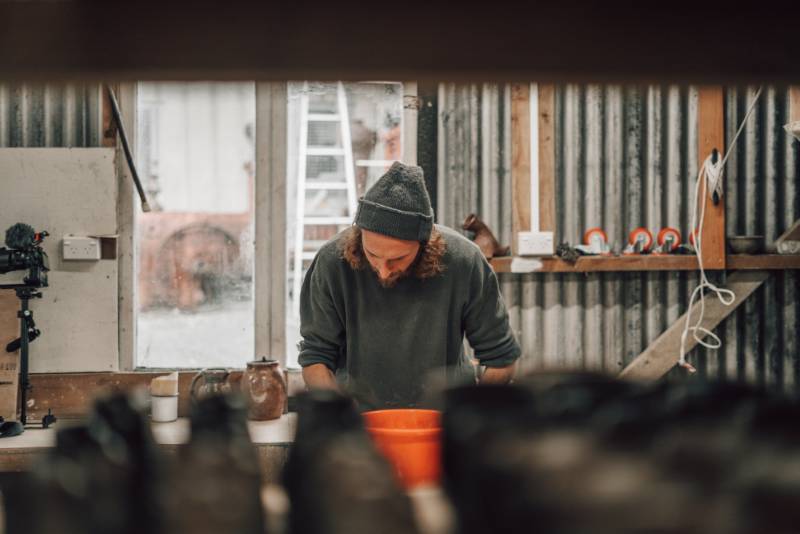
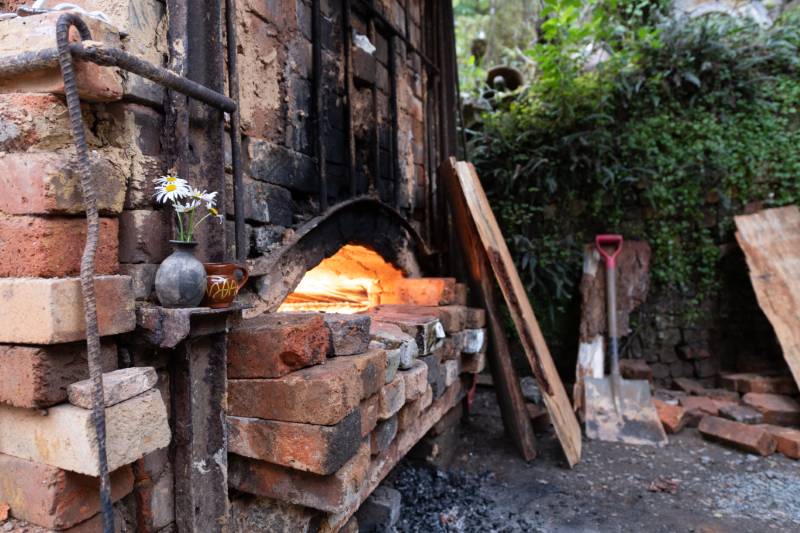
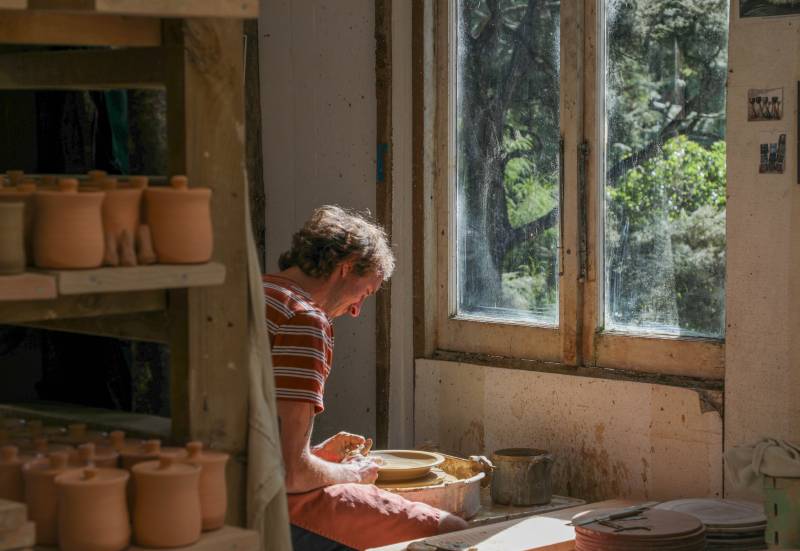
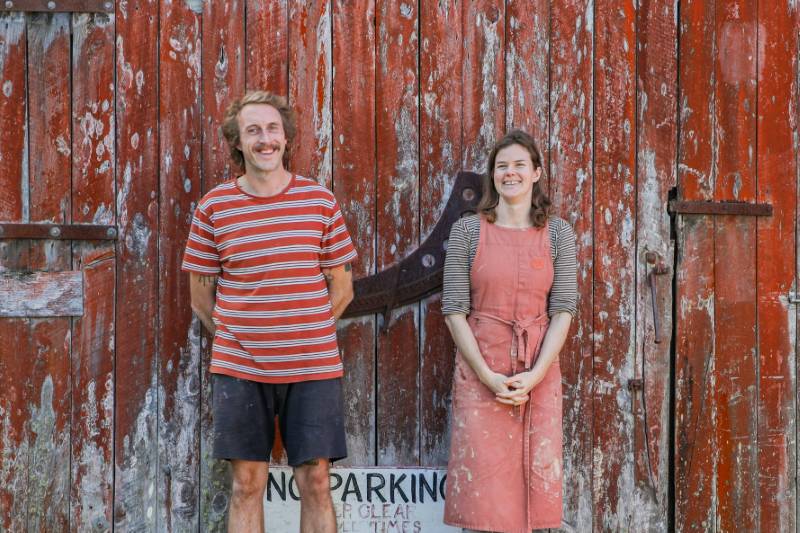
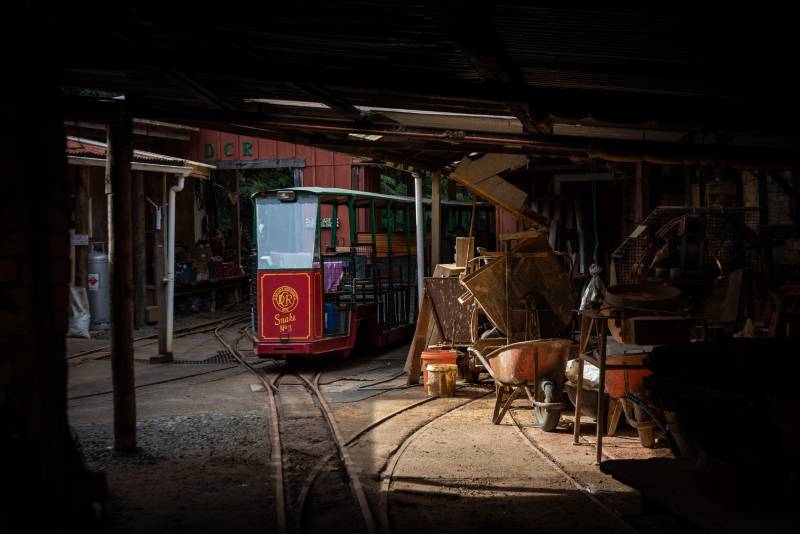
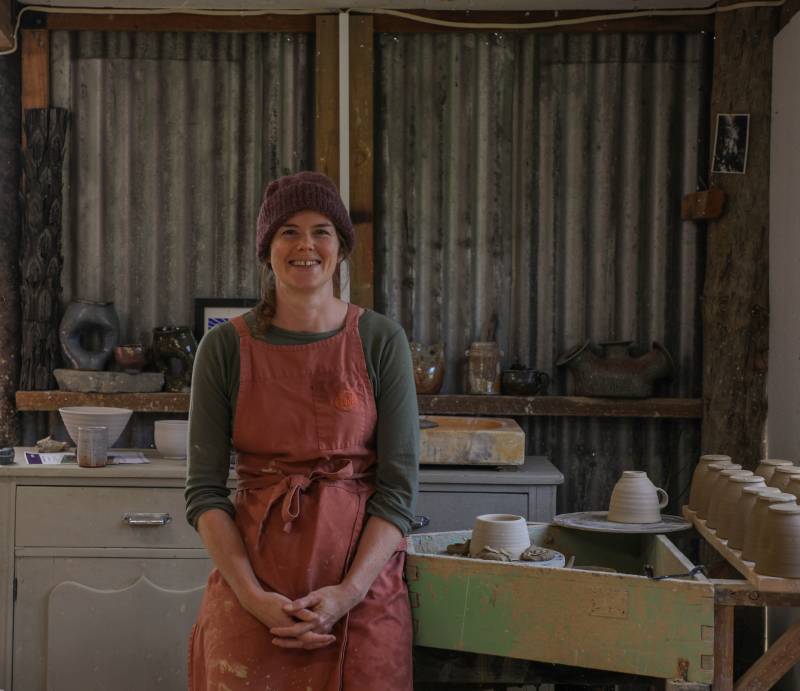
My pottery journey has led me to Driving Creek, Coromandel, New Zealand, where I have set up a production pottery following the Leach Pottery model, and we are about to embark on our own apprenticeship programme.
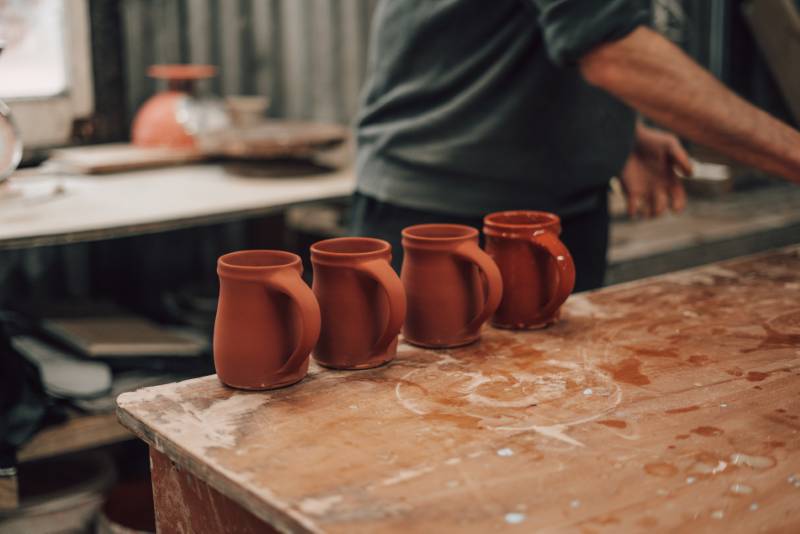
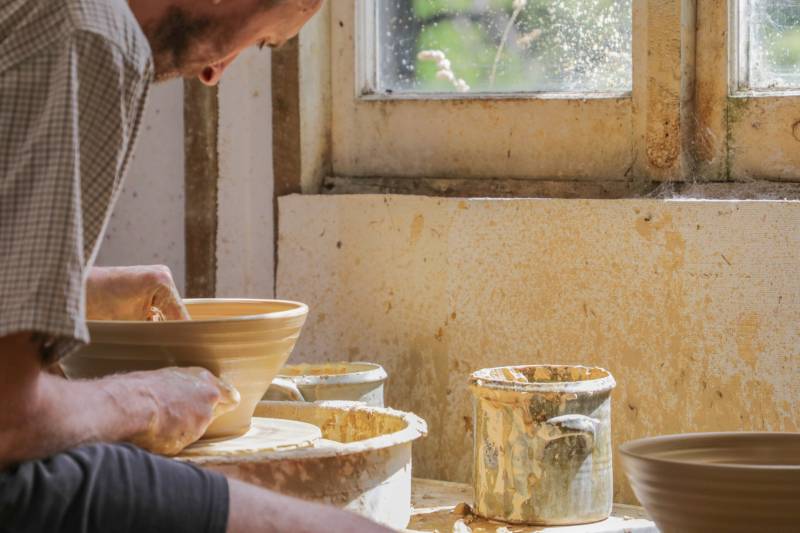
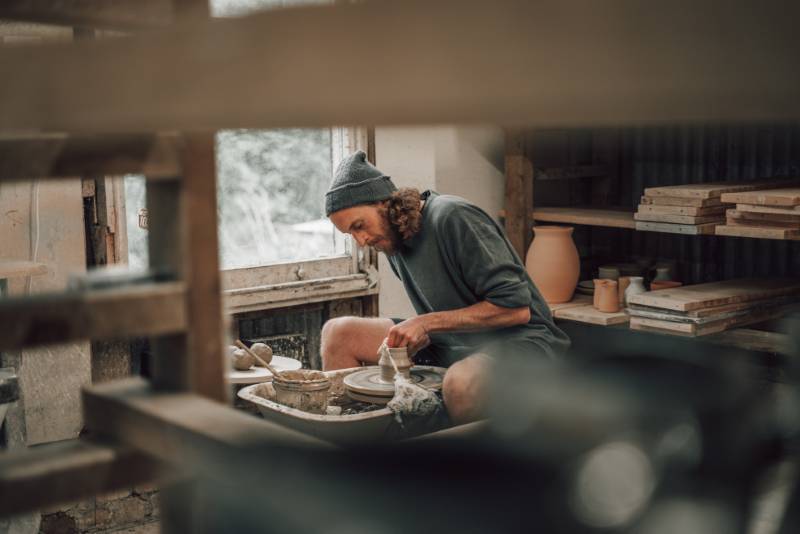
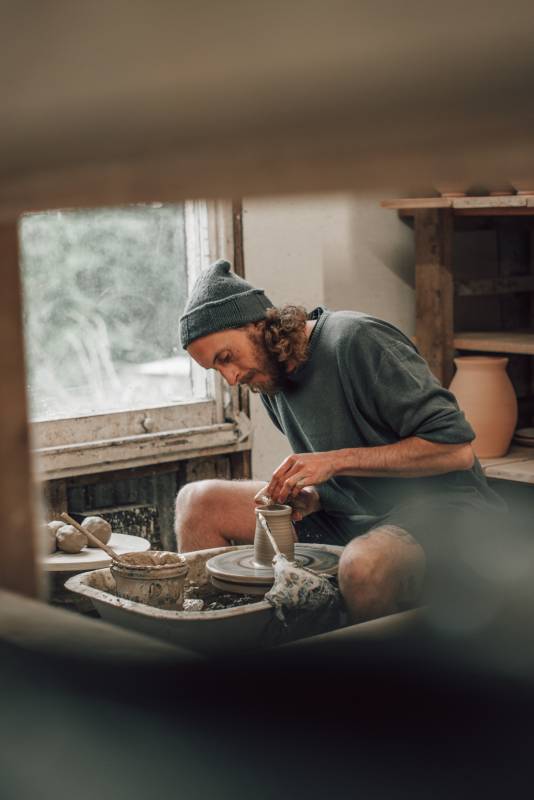
Apprenticeships offer more than just a way to learn skills; they’re an opportunity to learn how to make a career. You aren’t just learning technique, but learning how to work, how to observe, how to problem-solve in a collaborative environment in real time. In a production studio, you’re not making a few pots a week — you’re part of a team making hundreds. You learn about the full cycle, from processing raw materials to packing and shipping orders. You become immersed in repetition, repeating the process over and over, ingraining the skills into your body to the stage where muscle memory kicks in. I feel this repetition is an area many new potters overlook; however, I truly believe that once you learn how to repeat a form, you’ve learned how to control the clay in a way that makes creating your ideas far easier.
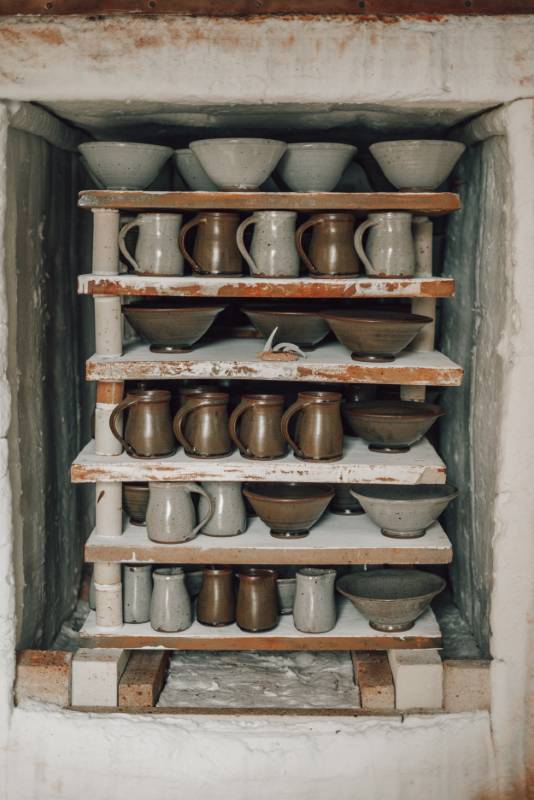
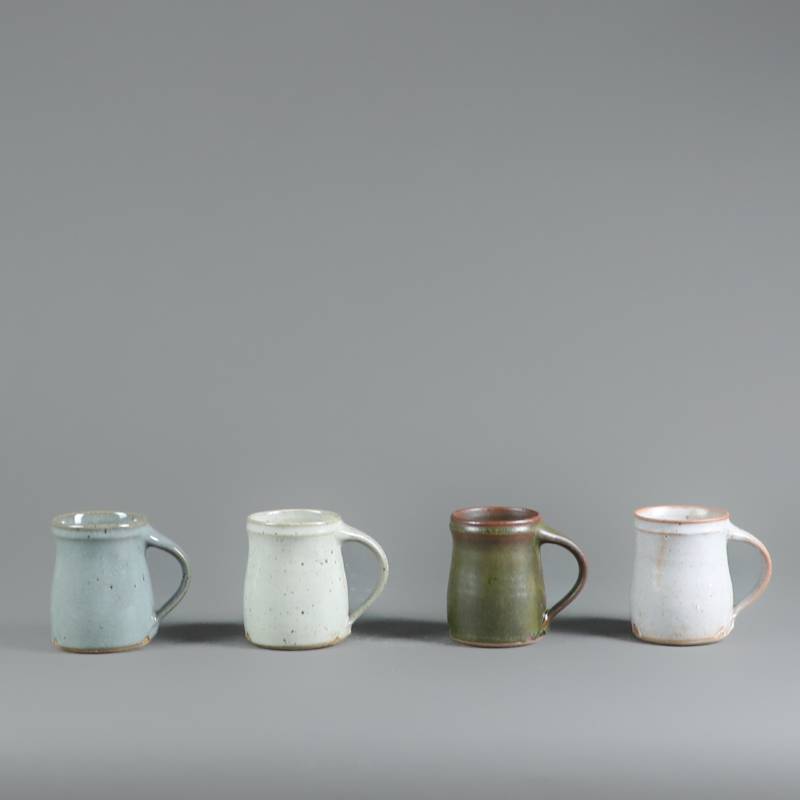
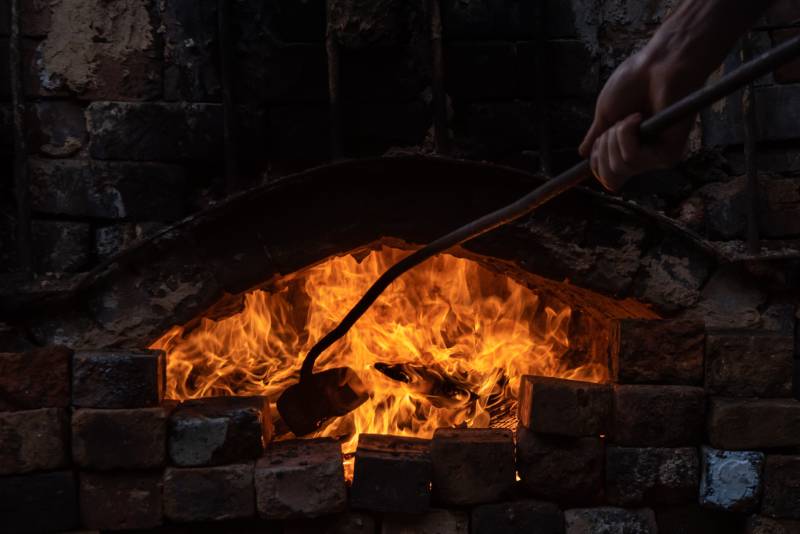
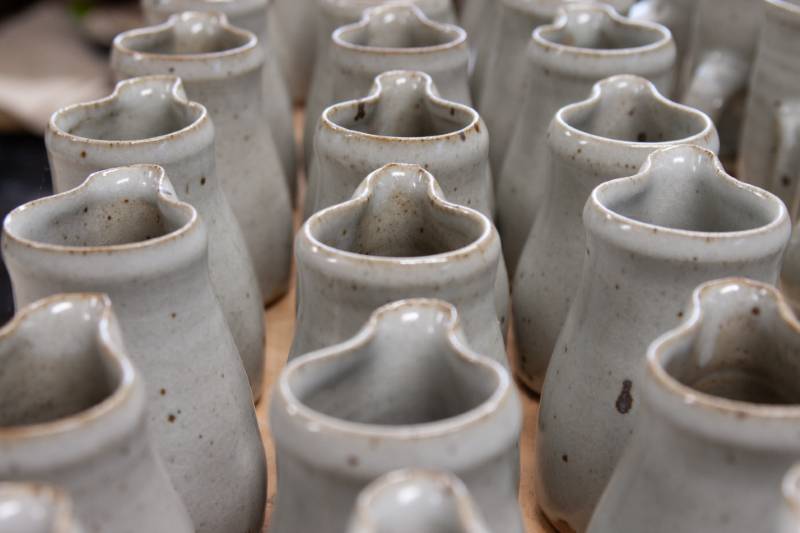
My career started in 2014, when I became the first fully trained apprentice at the Leach Pottery since it reopened as a charitable trust in 2008. The apprenticeship lasted three years; however, I worked in the studio for eight years altogether. The size of the team fluctuated between five and seven, depending on the volunteer programme in place. Following on from the way the pottery originally ran, a core team of potters worked alongside apprentices and volunteers to produce a standard ware range. At the time, we produced around 20,000 pots a year, and it is this quantity that I feel helped develop my skills at a fast pace. I was incredibly lucky to learn from potters with a variety of backgrounds, and in this environment — where you are producing a high quantity of pots — we were firing kilns a couple of times a week, which meant you received feedback from your work quickly and learned from everyone's successes and failures, not just your own.
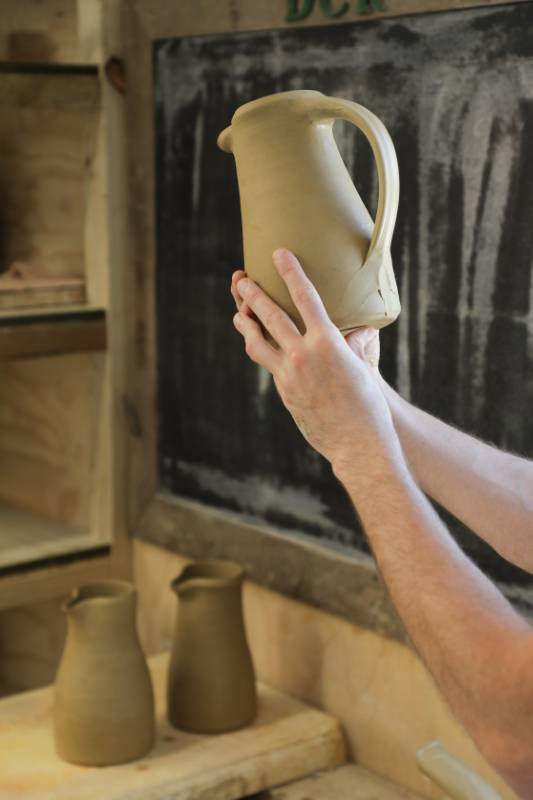
Through repetition and observation, I began to understand what made a good pot, how small changes could alter the feel of a pot, and how each stage in the process relied on the one before. I learned the importance of consistency — not just in the pots, but in attitude and approach. The studio was a place of focused labour, yes, but also of mentorship, laughter, and trust. Those years grounded me, gave me fluency with clay, and a deep appreciation for the production studio as both a creative and educational space. That experience continues to guide my own practice and vision for the future. Beyond the physical skills, the apprenticeship taught me a way of thinking about pottery. I learned to respect the materials, to embrace the unpredictability of the kiln, and to appreciate the rhythm of making. This immersive experience shaped my approach to ceramics, grounding me in a tradition that values both skill and intention.
I understand there are many challenges facing potters today — not only for those who want to learn, but also for those with skills they want to pass on. Young potters are learning about the craft via social media and seem to prioritise creating a brand and gaining a following above learning the fundamental skills and traditions of the craft. I caveat this with the fact that opportunities to learn the traditional skills are limited. Many of the potters who hold these skills find it hard to take on apprentices because of financial constraints — it’s hard enough to make a living as a potter, with many having to teach or do other work to supplement their income. These challenges are real, and they won’t be solved overnight. But it’s important to acknowledge them so we can look at new ways to support both sides of the equation.
To make apprenticeship opportunities possible, we need to think collectively as part of the pottery community. Programmes such as Adopt a Potter (UK) and Foster a Potter (AUS) are great examples of how we can support these opportunities. At Driving Creek, I’m working towards a production studio model based on my experiences at the Leach — a space where tradition and education combine to create a self-sustaining business that helps educate the next generation of potters. A space where potters can learn traditional skills in a production environment alongside others.
Driving Creek is a not-for-profit organisation, and I have the luxury of being supported financially by the other activities here to help set up the studio. Without this, it wouldn’t be possible. However, my aim is to make it a self-sustaining business so we are not training potters in a fully subsidised setting — I want to show it is possible to build a viable, working pottery that also trains others. I hope to prove this, but only time will tell. Still, I believe that by investing in people and tradition, we can build something lasting — not only pots, but pathways for the next generation of makers.